Copper & Scrap Metal Recycling Centre | Smithfield, NSW
🧾 Business Overview
Sydney Smithfield Copper Recycling is a local recycling centre in Smithfield, NSW, specialising primarily in copper recycling and scrap metal processing. The business positions itself around sustainability-focused recycling practices, supplying recycled copper products to downstream industrial demand.
With a limited Google review footprint (3.0⭐ from 2 reviews), the business currently shows low but early-stage digital trust signals, common among smaller or newer recycling operators that rely more on offline trade relationships than marketplace visibility.
📍 Key Business Details
- Business Name: Sydney Smithfield Copper Recycling
- Category: Recycling Centre / Copper Recycling
- Address: 84 Percival Rd, Smithfield NSW 2164, Australia
- Phone: +61 1300 572 727
- Hours: Open · Closes 5 pm
- Areas Served: Cabramatta and nearby areas
- Website: Listed on Google (active content updates visible)
⭐ Reputation Snapshot
- Google Rating: ⭐⭐⭐☆☆ 3.0 / 5
- Total Reviews: 2
Interpretation (Industry Context):
- Review volume is too low for statistically meaningful reputation analysis
- Rating suggests mixed or neutral early feedback
- Indicates opportunity for:
- Greater transparency
- Clearer pricing signals
- Broader buyer exposure
In the scrap industry, low review density does not imply poor operations, but it does reduce price confidence for sellers, especially in high-value commodities like copper.
🔄 Services & Specialisation
Based on Google listings and updates, the business focuses on:
- Copper recycling (clean & mixed grades)
- Scrap metal recycling
- Sustainability-driven processing
- Industrial copper supply alignment
Recent Google updates emphasise:
- Rising copper demand in 2026
- Environmental responsibility
- Scrap-to-industry value chain integration
This positions the business as material-focused, rather than consumer-scale scrap aggregation.
⚖️ Operational Model Assessment
Sydney Smithfield Copper Recycling appears to operate under a single-yard buyer model, where:
- Sellers bring copper scrap directly
- Pricing is determined internally
- No external buyer competition is visible
Strengths
- Focused copper specialisation
- Physical processing capability
- Sustainability-aligned messaging
Limitations
- Single price-maker model
- Limited public pricing transparency
- Minimal online trust & comparison signals
For copper sellers, price variance between yards can be significant, especially during volatile market cycles.
🌍 Market Shift: Copper Trading Is Becoming Data-Driven
Copper is no longer traded efficiently through single-yard pricing alone. Professional sellers increasingly use digital scrap trading platforms where:
- Multiple verified buyers compete
- Prices reflect real market demand
- Sellers gain pricing leverage and transparency
- Trades scale beyond suburb-level limitations
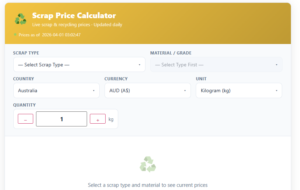
Through Scrap Trade, copper sellers can access a global scrap trading marketplace rather than relying on a single recycling centre valuation.
🔗 Global Scrap Trading Marketplace:
https://scraptradeonline.com/
❓ FAQs (Featured Snippet Optimised)
What does Sydney Smithfield Copper Recycling specialise in?
Primarily copper recycling, with a sustainability-focused processing approach.
Is the business suitable for high-volume copper sellers?
Yes for direct processing, but sellers may benefit from comparing prices across multiple buyers.
Does the business offer competitive copper pricing?
Pricing is yard-determined; market comparison is recommended for higher volumes.
How can I ensure I get the best copper price?
By listing copper scrap on a multi-buyer digital marketplace where pricing is competitive and transparent.
✅ Conclusion
Sydney Smithfield Copper Recycling functions as a localised copper recycling operator with sustainability messaging and physical processing capability. However, limited public trust signals and single-buyer pricing can restrict value discovery for sellers—particularly during strong copper market cycles.
For sellers focused on maximising copper returns, the industry is moving toward open, competitive, digital scrap trading networks.