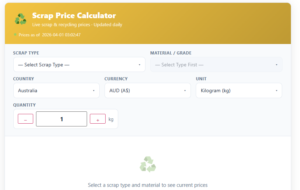
How Scrap Trade Platform Works (Complete Guide to Buy & Sell Scrap Online in 2026)
Many businesses still struggle to sell scrap efficiently due to limited buyer access, price transparency issues, and slow deal cycles. As a result, they often rely on middlemen and lose significant profit margins. At the same time, buyers face difficulty sourcing consistent, high-quality scrap.
So, how does a scrap trade platform work? In this guide, you’ll learn the complete process of how scrap trading platforms operate, how buyers and sellers connect, pricing mechanisms, and how to maximize profits using digital marketplaces. Additionally, you’ll discover how to scale your scrap business using global platforms.
What Is a Scrap Trade Platform?
A scrap trade platform is an online B2B marketplace where buyers and sellers trade scrap materials directly.
It connects:
- Scrap suppliers (industries, traders)
- Buyers (recyclers, manufacturers, exporters)
In simple terms, it eliminates middlemen and improves pricing transparency.
Popular platforms include:
How Scrap Trade Platform Works (Step-by-Step)
Step 1: Registration & Account Setup
First and foremost, users create an account on the platform.
- Add business details
- Verify contact information
- Choose buyer or seller profile
As a result, verified profiles build trust and attract serious deals.
Step 2: Listing Scrap Materials
Next, sellers upload their scrap listings.
Details required:
- Scrap type (copper, aluminum, steel, etc.)
- Quantity (kg/tons)
- Quality/grade
- Location
Therefore, detailed listings receive more buyer inquiries.
Step 3: Buyer Discovery & Inquiries
Then, buyers browse listings or post requirements.
- Search by material type
- Filter by location and quantity
- Contact sellers directly
Consequently, sellers receive multiple inquiries quickly.
Step 4: Price Negotiation
After that, buyers and sellers negotiate pricing.
- Compare multiple offers
- Adjust pricing based on volume
- Finalize terms
In most cases, competition increases the final selling price.
Step 5: Deal Confirmation
Once agreed, both parties confirm the deal.
Includes:
- Final price
- Quantity
- Delivery terms
- Payment method
Because of this, transactions become structured and secure.
Step 6: Logistics & Pickup
Next, logistics are arranged.
- Buyer pickup
- Third-party transport
- Export shipping
Thus, platforms often simplify logistics coordination.
Step 7: Payment & Transaction Closure
Finally, payment is completed.
- Instant payment (small deals)
- Bank transfer (bulk deals)
As a result, transactions are faster and more reliable.
Scrap Trade Platform Workflow
| Stage | Action | Outcome |
|---|---|---|
| Registration | Create account | Verified profile |
| Listing | Upload scrap | Buyer visibility |
| Inquiry | Receive offers | Price discovery |
| Negotiation | Compare deals | Higher value |
| Deal | Confirm terms | Secure agreement |
| Logistics | Arrange delivery | Smooth transaction |
| Payment | Close deal | Revenue |
Key Features of Scrap Trading Platforms
Real-Time Buyer Access
- Connect with global buyers instantly
- Therefore, increase demand for your scrap
Transparent Pricing
- Compare multiple offers
- As a result, avoid underpricing
Verified Buyers & Sellers
- Reduced fraud risk
- Thus, safer transactions
Bulk Trading Support
- Handle large volumes easily
- Consequently, scale operations faster
Scrap Pricing on Trading Platforms (2026)
| Material | USD/kg | AUD/kg |
|---|---|---|
| Copper | $7 – $11 | $10 – $17 |
| Aluminum | $2 – $3.5 | $3 – $5 |
| Steel | $0.3 – $0.7 | $0.5 – $1 |
| Brass | $4.5 – $7.5 | $7 – $11 |
Keep in mind, prices vary based on demand, location, and scrap quality.
Benefits of Using Scrap Trade Platforms
- Firstly, access global buyers
- Secondly, get better pricing
- Additionally, reduce dependency on middlemen
- Moreover, faster deal closure
- Finally, scalable business growth
Overall, platforms increase both efficiency and profitability.
Common Mistakes to Avoid
- Incomplete scrap listings
- Ignoring buyer verification
- Not comparing multiple offers
- Delaying responses
- Selling mixed scrap
Because of this, sellers lose high-value opportunities.
How to Maximize Profit Using Scrap Platforms
Optimize Listings
- Add clear descriptions and images
- Then, highlight quality and quantity
Respond Quickly
- Faster replies increase deal closure rate
Sell in Bulk
- Bulk listings attract serious buyers
Monitor Market Trends
- Sell during peak demand periods
As a result, you can increase profits by 20–40%.
FAQs: How Scrap Trade Platform Works
How does a scrap trading platform work?
Basically, it connects buyers and sellers, allowing them to list scrap, negotiate prices, and complete transactions online.
Is it safe to sell scrap online?
Yes, most platforms verify users and provide secure transaction processes. However, always check buyer credentials.
Can I sell scrap internationally?
Absolutely, global platforms allow you to connect with international buyers and exporters easily.
How do I get the best price on scrap platforms?
To maximize value, list clean scrap, compare offers, and negotiate based on demand.
Are scrap trading platforms free?
Some platforms are free, while others charge listing or transaction fees depending on features.
Conclusion
To sum up, understanding how a scrap trade platform works can transform your scrap business. While traditional selling methods limit your reach, digital platforms unlock global buyers, better pricing, and faster deals.