How to Sell Factory Scrap (Step-by-Step Guide to Maximize Industrial Scrap Value in 2026)
Many manufacturers struggle with how to sell factory scrap efficiently. Often, scrap is sold to local dealers at low prices due to poor segregation, limited buyer access, or lack of pricing knowledge. As a result, businesses lose a significant portion of potential revenue.
How to Sell Factory Scrap
Step 1: Identify & Categorize Factory Scrap
First and foremost, classify your scrap materials.
Common factory scrap types:
- Metal scrap (copper, aluminum, steel)
- Machinery scrap
- Electrical scrap (wires, panels)
- Packaging waste
As a result, proper categorization increases value.
Step 2: Sort & Segregate Materials
Next, separate scrap by type and quality.
- Ferrous vs non-ferrous metals
- Clean vs contaminated scrap
Therefore, segregation can increase price by 20–50%.
Step 3: Clean & Prepare Scrap
After that, improve scrap quality.
- Remove oil, dirt, and plastic
- Strip wires for copper recovery
Consequently, clean scrap gets premium rates.
Step 4: Measure Quantity Accurately
Then, calculate total scrap volume.
- Use weight (kg/tons)
- Record material types
Because of this, buyers can quote accurately.
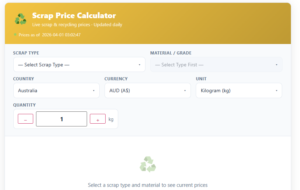
Step 5: Check Scrap Market Prices
Before selling, understand current rates.
| Material | USD/kg | AUD/kg |
|---|---|---|
| Copper | $7 – $11 | $10 – $17 |
| Aluminum | $2 – $3.5 | $3 – $5 |
| Steel | $0.3 – $0.7 | $0.5 – $1 |
| Brass | $4.5 – $7.5 | $7 – $11 |
As a result, you avoid underpricing your scrap.
Step 6: Find Scrap Buyers
Now, connect with multiple buyers.
- Local scrap dealers
- Industrial recyclers
- Export buyers
Therefore, multiple buyers increase competition and pricing.
Step 7: Create Bulk Listings
In addition, list your scrap online.
Include:
- Scrap type and grade
- Quantity
- Location
- Images
Consequently, detailed listings attract serious buyers.
Step 8: Negotiate & Finalize Deal
After receiving offers, compare and negotiate.
- Evaluate price per kg
- Check buyer credibility
- Confirm terms
As a result, you secure the best deal.
Step 9: Arrange Pickup & Payment
Finally, complete the transaction.
- Buyer pickup or transport
- Confirm payment method
Therefore, ensure payment before dispatch.
Factory Scrap Selling Workflow
| Stage | Action | Outcome |
|---|---|---|
| Sorting | Categorize scrap | Higher value |
| Cleaning | Remove impurities | Better pricing |
| Listing | Upload details | Buyer visibility |
| Negotiation | Compare offers | Max profit |
| Sale | Finalize deal | Revenue |
How to Maximize Profit from Factory Scrap
Sell in Bulk
- Combine scrap over time
As a result, higher pricing
Use Global Platforms
- Reach international buyers
Therefore, better offers
Improve Scrap Quality
- Clean and sort materials
Consequently, premium rates
Monitor Market Trends
- Track price fluctuations
Thus, sell at peak time
Common Mistakes in Selling Factory Scrap
- Mixing different scrap types
- Selling without checking prices
- Relying on one buyer
- Ignoring online platforms
- Not negotiating
Because of this, industries lose significant revenue.
Real Example: Factory Scrap Sale
| Scenario | Action | Result |
|---|---|---|
| Unsorted scrap | Sold locally | Low price |
| Sorted + bulk | Listed online | High price |
| Export sale | Global buyers | Premium profit |
Clearly, strategy impacts earnings.
FAQs: How to Sell Factory Scrap
How do factories sell scrap materials?
They sort, clean, list, and sell scrap to dealers or online platforms after comparing multiple offers.
What is the best way to sell factory scrap?
Selling in bulk, using online platforms, and comparing buyers ensures maximum profit.
Can factories sell scrap internationally?
Yes, global platforms allow direct export selling to international buyers.
How can I get the best price for factory scrap?
Improve quality, track prices, and negotiate with multiple buyers.
Is factory scrap valuable?
Yes, especially metals like copper and aluminum have high resale value.
Conclusion
To sum up, knowing how to sell factory scrap properly can turn industrial waste into a strong revenue source. While traditional selling limits profits, optimized strategies—sorting, bulk selling, and global buyers—maximize returns.